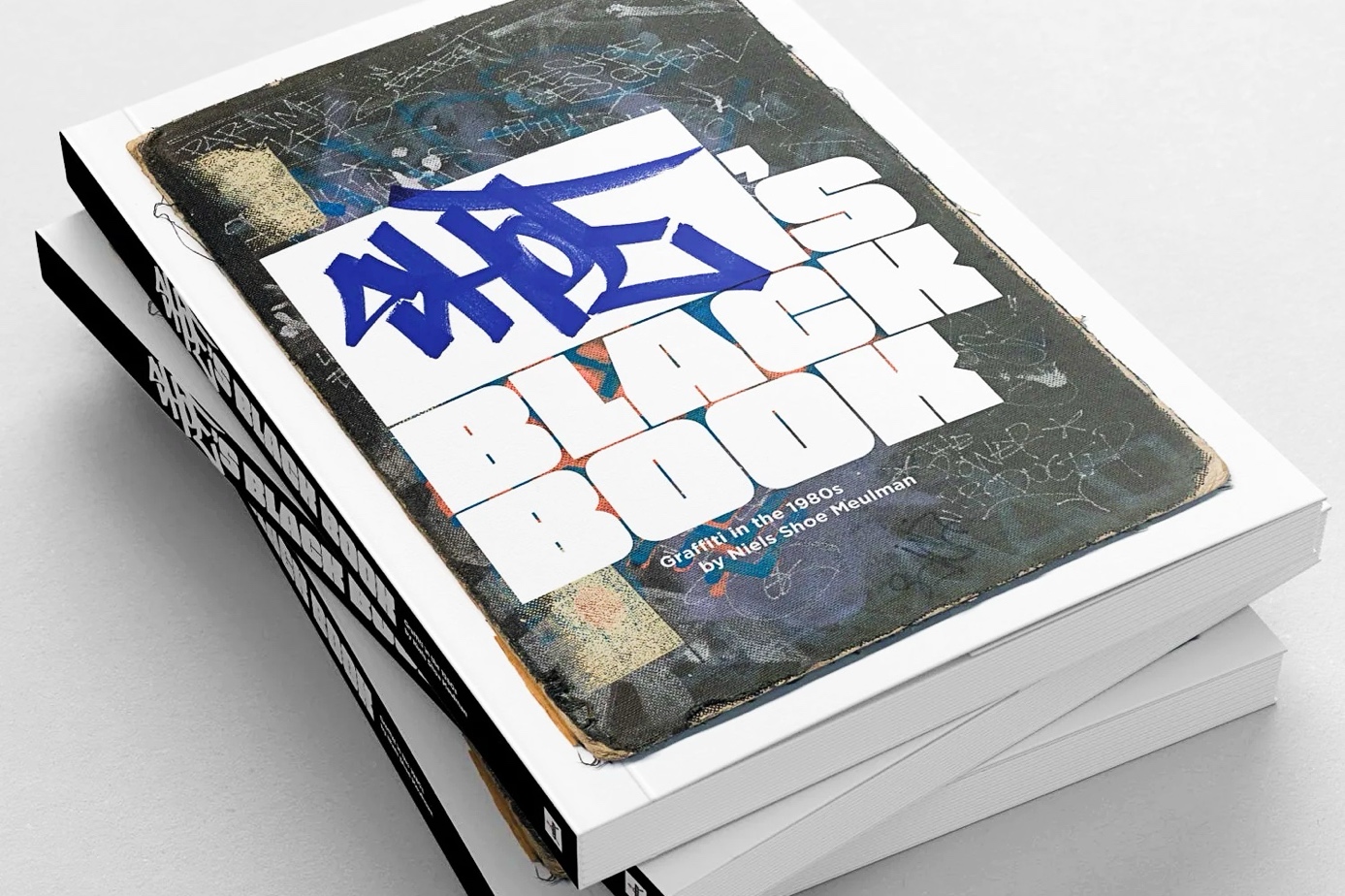
I had the pleasure of editing Shoe’s Black Book − Graffiti in the 1980s by Niels Shoe Meulman. It’s based on his original black sketch book from when he was drawing, learning and vandalising under the tutelage of legends from the original NY graffiti and street art scene like Rammellzee, Dondi White and Keith Haring. The resulting book actually represents a whole new genre: a book-within-a-coffeetable-book-within-an-international-art-heist-flick.
When Amsterdam was shaded
Amsterdam in the mid-1980s wasn’t the museum city postcard it is today. Vacant lots remained vacant. Squatters squatted. Trams hissed like old, asthmatic snakes. Bikes still needed to be pedalled. And the shadows were thick enough to swallow a kid whole.
That’s where a teen writer named Shoe started keeping a small black book. It was nothing fancy, just early tags, legends’ signatures, and the kind of secrets only the graffiti scene cared about – like wtf “window down whole car” means.
Shoe’s Black Book − Graffiti in the 1980s by Niels Shoe Meulman does a great job of evoking a time of stealing spray cans by day and writing by night.
The good old days. Until they weren’t.
Art, crime, confusion
Every spread in the new book shows a page from the original black book paired with Shoe’s photos and recollections. It’s half diary, half evidence locker – but with the statute of limitations long past.
The stories are hilarious. For instance, when gothic-futurist-slash-cosmic-rebel RAMM:ΣLL:ZΣΣ – wearing his flamboyant red gown with cape and multiple sunglasses – lured Shoe to do throw-ups on the Stedelijk Museum of Modern Art. Naturally, they were arrested immediately. At the police desk, Ramm kept shouting “Ramm, Ell, Zee!” while cops demanded his passport name. “He never gave it, and they let us go because it was all just too confusing for them.”
And that’s how it was back then. The lines between art, crime and confusion were thin.
Or when Keith Haring, already world-famous and in town for his massive exhibition at the very same Stedelijk in 1986, was casually drawing in Shoe’s teenage bedroom when his mother came home from work. “She was flabbergasted. He gifted my mom one of the Swatch watches he had designed.”
Indeed, Keith knew how to work a room – and win over a confused Dutch mom.
Returning to the scene. The crime scene
But the real mystery began in ‘89, when the black book disappeared from Shoe’s mother’s house. Vanished along with all his graffiti gear. No witnesses or clues. Just a broken window. The loss soured him on graffiti somewhat and nudged him towards a successful international art career. So, in a way, the theft – along with Shoe’s own escalating jail time – served as an unconventional guidance counselor.
Years later, the book reappeared, like a cold case that had caught fire. Anonymously. No explanation or apology. Shoe flipped through it. It seemed intact, only slightly vandalized by its captors.
More time passed, and Shoe discovered something chilling: a Keith Haring drawing titled ‘RADIO MAN (FOR SHOE)’ had surfaced at Christie’s auction house and apparently sold to an unknown French collector for 4,000 guilders. The dedication was unmistakable. And then he remembered: this was from his black book. Someone had carefully excised it.
The case remains open. Shoe believes the missing page will eventually emerge from the shadows and be his again. He might be right. After all, art – like a criminal – has a way of returning to the scene.
The book, hand-signed with a Shoe tag, also has a special hardcover edition with additional original art. Both were designed by Ferry van Zijderveld of Undog and published via his Ruyzdael Publishing, with support from the Mondriaan Fund. Check out Ruyzdael’s other graffiti-related books and sign up for the mailing list – Ferry has numerous inspiring publishing plans in the works.
Meanwhile, the book was presented on 7 December 2025 at Amsterdam’s posh and well-lit city archive, Stadsarchief, complete with a city councillor quoting whole verses from KRS-One. Yes, the times have changed…


