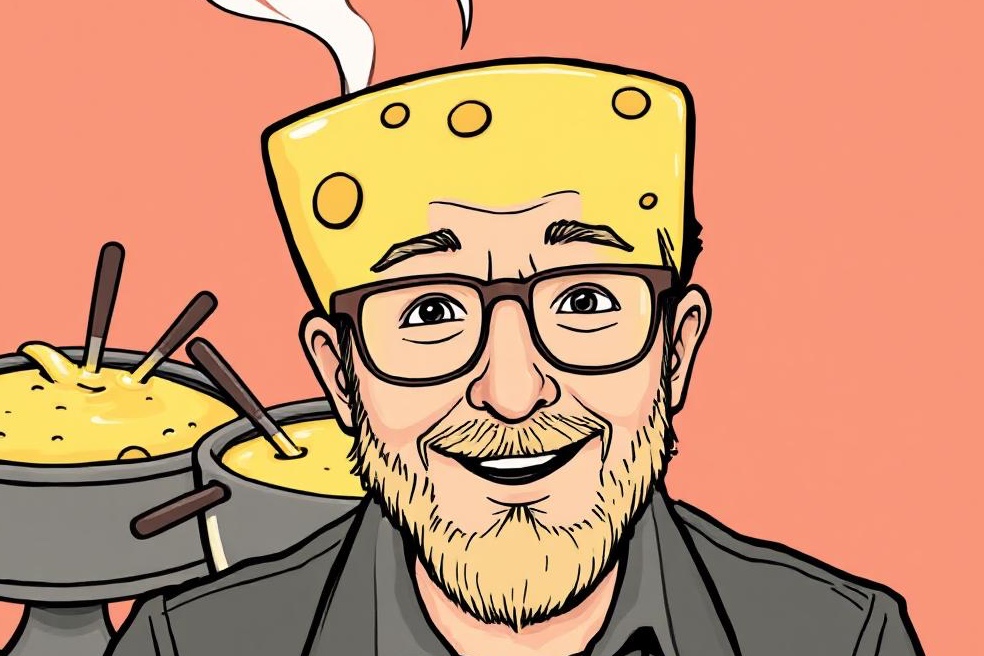
I miss free food. But with the enshittification of the internet, there might be room again for more old-school restaurant reviewers using third-party expense accounts. Chubby fingers crossed!
Back in the day, I made a good part of my living reviewing restaurants. Getting paid to eat is obviously a great job. It was my passion, and I embraced it. I was one smug, well-fed puppy. Until Yelp, TripAdvisor, and their ilk brought in the crowd and ruined it for me. Eventually, I grudgingly admitted the democratic approach made perfect sense. I accepted that the crowd was generally a better reviewer than any individual, especially when that individual (me) was grumpy. But still, I miss it.
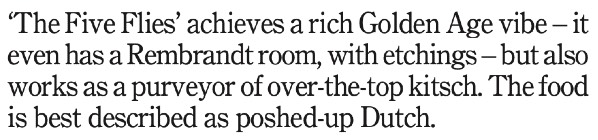
Of course, there’s still room for knowledgeable professional reviewers at big-name publications. But I’m not built for hyper competition. And anyway, I was more of a meat-and-potatoes type: guidebooks, travel magazines, newspaper supplements, and soon-to-fail website startups. Sure, I could have tried to become a food influencer – there are some great ones – but the income streams are complicated, and your integrity is always up for grabs. I want it simple: get paid to eat, with the tab picked up by a third party. Good times.
Now, with the enshittification of the internet, both the crowds and the influencers are losing trust. Maybe I can get my old gig back.
The power of positive reviewing
I was never interested in writing bad reviews. My job was usually to select and write about the best restaurants, balancing cuisines, price ranges, and captivating stories (from that steakhouse secretly serving horse to that snackbar selling a Kapsalon Viagra). The goal was to showcase Amsterdam’s culinary scene, which at the time was finally moving away from over-boiled veg and half-assed French – with only the food of Indonesia and Suriname as consistent bright spots.
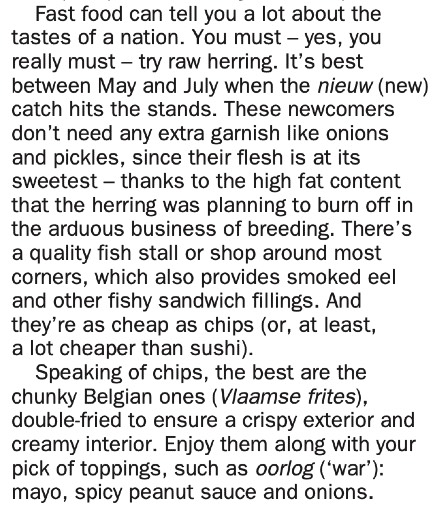
If a restaurant sucked, you’d simply skip it. Very straightforward. There were exceptions, of course – a non-melted cheese tosti might be forgiven if the place had a mind-melting décor. Then, you could still mention it but with some balanced reporting (“Amazing Art Nouveau wallpaper! But stick to a beverage. For food, grab a broodje pom at the Indo-Suri-Chin snackbar around the corner. Be sure to ask Ricardo for extra sambal.”).
But in general, I just wanted to stay positive. This was important to me (and not only as tribute to my psychotically positive mother). I had previously run aground as a pop culture/cult pop journalist precisely because I had been enthusiastically positive about the wrong things. I originally got into journalism to hype the underhyped – ESG! Ween! Philip K. Dick! But when a London editor discovered I could write scathing, sarcastic reviews (which the British love), I was only ever assigned things they knew I’d hate: U2, Madonna’s children’s book, some second-rate Philip K. Dick wannabee. The work dwindled, and I moved on to other specialties – sex, human rights, or sometimes both.
Restaurant reviewing as lifestyle choice
For as long as it lasted, I took restaurant reviewing very seriously and lived by the quip: “I’m on a seafood diet. If I see food, I eat it.”
I read all the classics, and some of the great food writers became among my favourite authors – Elizabeth David, Craig Claiborne, Calvin Trillin, and yes, I was an early adopter of Anthony Bourdain.
After much worshipping from afar, I also had the pleasure of getting acquainted with the legendary Johannes van Dam, Amsterdam’s iconic and iconically bitchy restaurant critic, which felt like a kind of professional blessing (though he had no patience for my happy-shiny positive ways).
While Johannes always had an assistant along when he reviewed a restaurant (a job I would have gotten a tummy tuck for), I preferred the solitude. I rarely shared my expense account, preferring to go out alone whenever possible. There was also the undercover aspect that I enjoyed – hiding my notes in a newspaper, feeling vaguely like a spy, with my own expanding girth as an increasingly effective bulletproof vest.
I did get busted once. The owner asked directly if I was writing a review, and I didn’t lie or deny. At first, I was delighted when the ordered half lobster became a whole one, and many extra glasses of wine materialised. Everything was delicious and had that secret ingredient known as love. But as I got pissed on the wine, I also got pissed off and grumpy: How dare he try to bribe me? I have my objectivity, goddammit! So, I simply left his restaurant out of the guidebook. Ha! Showed him.
Why Richard Branson is my favourite billionaire
It was definitely a case of faking it until I made it. Expense accounts, like my income, were limited. For the high-end market, I had to depend on the advice and stories of monied friends. Then Richard Branson entered my life…
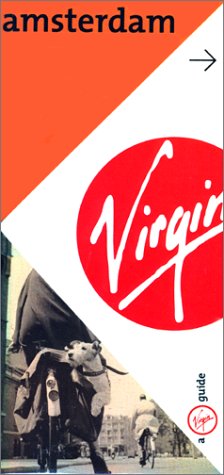
He tried to break into the guidebook market with a Virgin City Guide series covering the world’s major cities. I handled the eating section for Amsterdam, was paid well, and received an unprecedented expense account that covered the dozens of restaurants I wrote about. There was even a week when I had to do two five-course meals a day to meet the deadline. I brought a friend once or twice, but mostly I was greedy – this was my chance to learn about restaurants I could never afford.
The Virgin guidebook, predictably, didn’t survive. Too much overhead went in, through, and out of my digestive system.
But thanks for making me legit, Dick.
Five days, five fondues
It’s not all glamour. There are occupational hazards.
Once, due to a deadline crunch, I had to review five of Amsterdam’s best cheese fondue restaurants in five days. It felt like a dream assignment. At first…
Day one: lovely and down-to-earth, with a recipe that apparently originated with a nuclear physicist. Great selection of salads for balance. (And the restaurant still exists, largely unchanged: Café Bern – check it out.)
Day two: fancy. They even cut the bread into bite-sized pieces for you, and the recommended wine was a nippy little white delight that easily made its own friends.
Day three: still fine, technically. I found myself taking detailed notes about the cheese-to-bread ratio. In retrospect, this obsessiveness should have set off some alarm bells.
Day four: the smell of Gruyère and Emmentaler had begun to follow me home. I began to suspect that my once-discrete double chin was now drooping more downward and in danger of dipping into the bubbling cauldron of napalm-like cheese. I began hearing some ding-dongs.
Day five: my pores were no longer excreting sweat but grease. I was strung out on stringy cheese. I was no longer reviewing fondues – I had become one. Call it method eating. Call me Al Pecorino. Robert de Cheesewheel. They say you are what you eat, but this was next level.
It was a couple of years before I went near a fondue again. But I got over it. I’m a professional that way.
Don’t mention the butter tasting
As reviewing became more crowd-sourced, expense accounts dried up. There was an ethically dubious transition period when the restaurant would pick up your tab. And as a bonus, the visit usually involved a chat with the chef – and we would usually end up gossiping about Johannes van Dam. Apparently, Johannes would still go to butter tastings in his toothless final days. Instead of imagining a man I admired slobbering on butter sticks, I’d wonder how one cleanses one’s palate between butters. By gargling with olive oil?
Of course, these conversations were always wonderful and culinarily educational (for instance, I learned a carbonated mineral water is the standard palate cleanser during butter tastings).
But you could no longer call it independent journalism.
Trust me: don’t believe the democratic hype
Gradually, the crowd took over, and I found it genuinely useful. While driving around Europe on vacation with my family, I could type something along the lines of, “shameless omnivore with fussy kids and a vegan wife” and usually find something that made everyone happy. This was the democratic ideal working as intended.
But now the times have changed. Crowd-sourced restaurant reviews are declining fast in reliability, eroded by fake, fraudulent, and AI-generated content. And there was always a subjective skew in crowd-sourced reviews: negative experiences are far more likely to prompt a review than positive ones. Plus, when people see existing opinions, they tend to conform to them (which also undermines the whole point of independent crowdsourcing). Add in contextual bias (like with tourists being more forgiving than locals), stereotyping of non-Western cuisines, and reviews based on a single unrepresentative visit, and it all gets misleading fast.
This means there could be space for a passionate person who knows what they’re talking about, has no affiliate links to disclose, and just wants someone else to foot the bill.
In other words, I’m a simple man with simple needs and talents whose time has hopefully come again. I promise to up my game and not let grumpiness get in the way of an objective view. I’ll also work harder at staying incognito; I won’t even tell my family (otherwise they might force me to bring them along and pick up their tab).
And yes, I’m available.


