Amsterdam tells great stories through its buildings – often hilarious, dark or both. In the process, it also offers a concise overview of architecture’s history. One brick, two birds! Combine, if you must, with a café crawl.
While it may lack a surplus of tall buildings, Amsterdam – built on conquered mud, as one 19th-century critic put it – offers a 700-year overview of how our living arrangements have evolved. Unlike Rotterdam, it never got clean-slated by bombs. Plus, you don’t need a glossary.
Read: ‘Writing about architecture
is like dancing about architecture‘
Only four things shaped almost everything here: sloppy soil, beer money, an obsessive business sense, and mistakes.
Like shit, wood floats
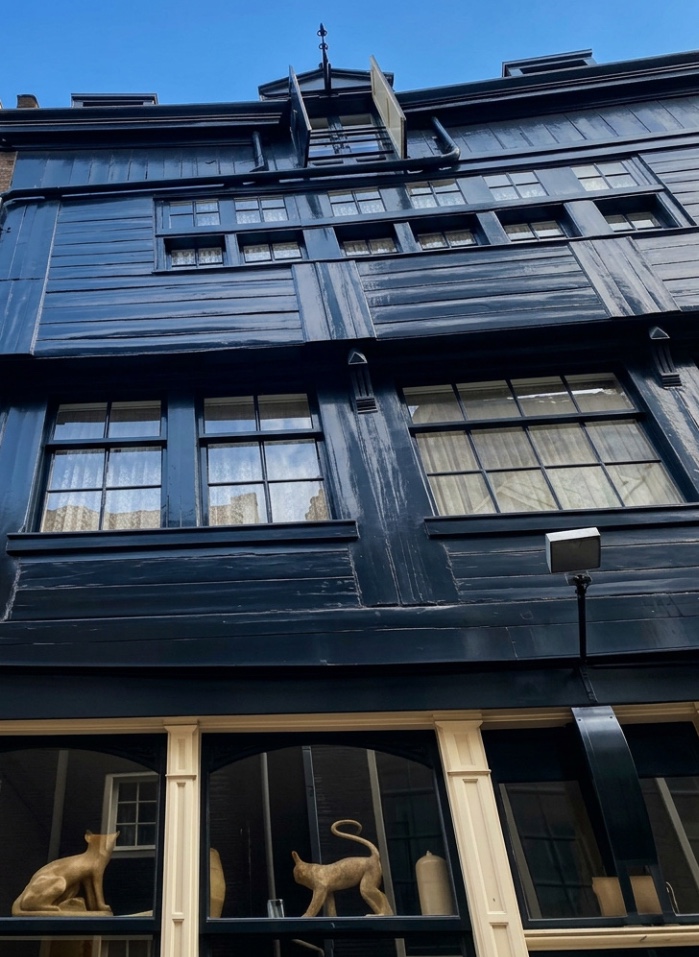
Amsterdam first pulled itself out of the unsanitary bog by using light, floaty wood to build homes. As it became a successful trading town thanks to toll exemption and a fat monopoly on Hamburg beer, residents could afford to drive supportive wooden poles into the ground to reach more stable sand, which made brick construction possible – and no more Great Fires.
Those first brick buildings even imitated their wooden predecessors and leaned out over the street – and not because of shoddy workmanship or gravity. Medieval timber houses had already jutted each story out over the one below to drip rainwater clear of the walls, and the brick buildings inherited that trick. The same forward wonkiness lets you hoist a beer barrel to the attic without punching out a window. Win-win.
Brick-faced
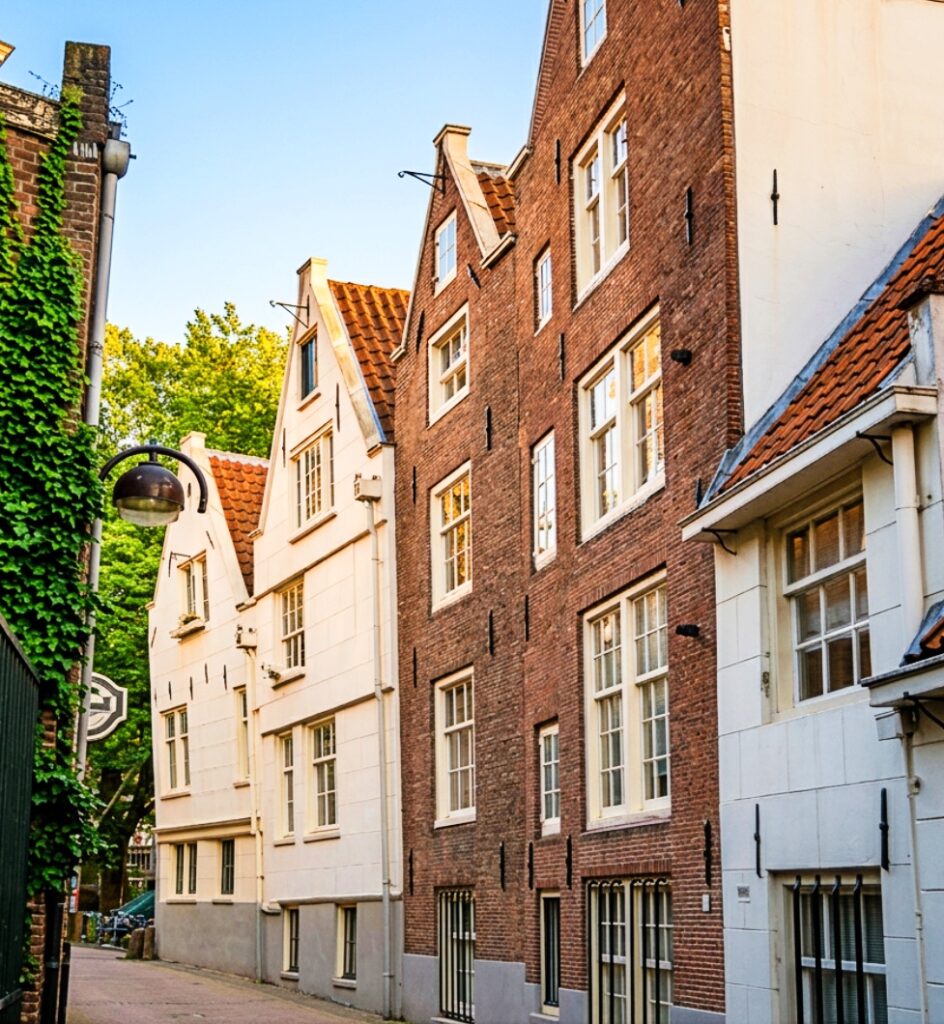
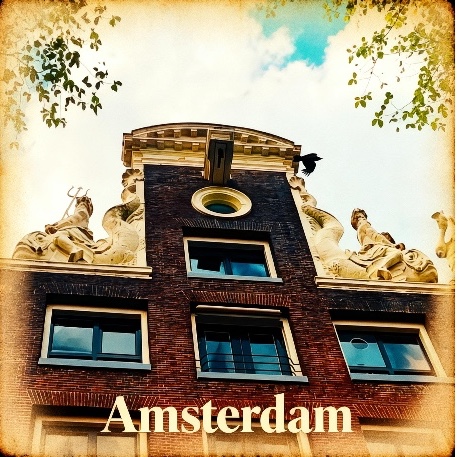
Property along a canal was taxed by the width of your frontage, so merchants built narrow, deep and tall – then crowned the result with a fancy top gable to show off. And the shapes followed fashion: plain spout, stepped, scrolled neck, flouncy bell, and then the flat cornice that called the party off. Read them in order and you watch European taste dress up, get drunk, and sober up again.
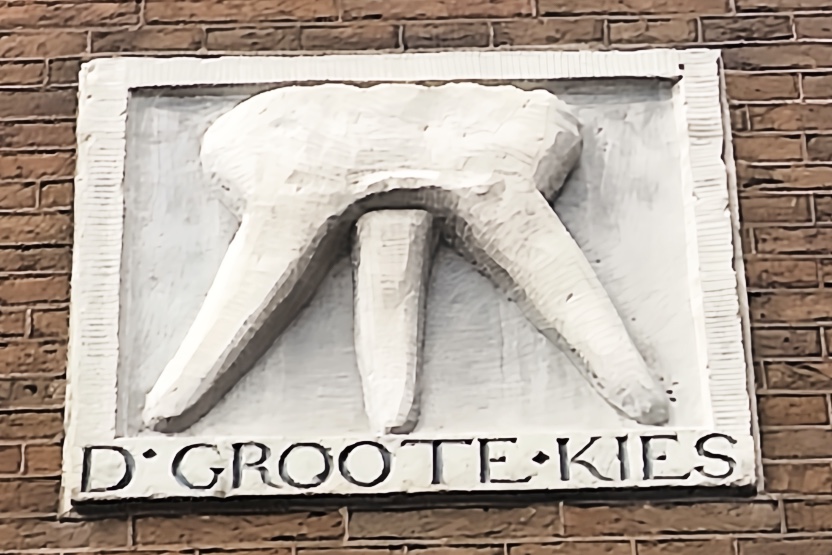
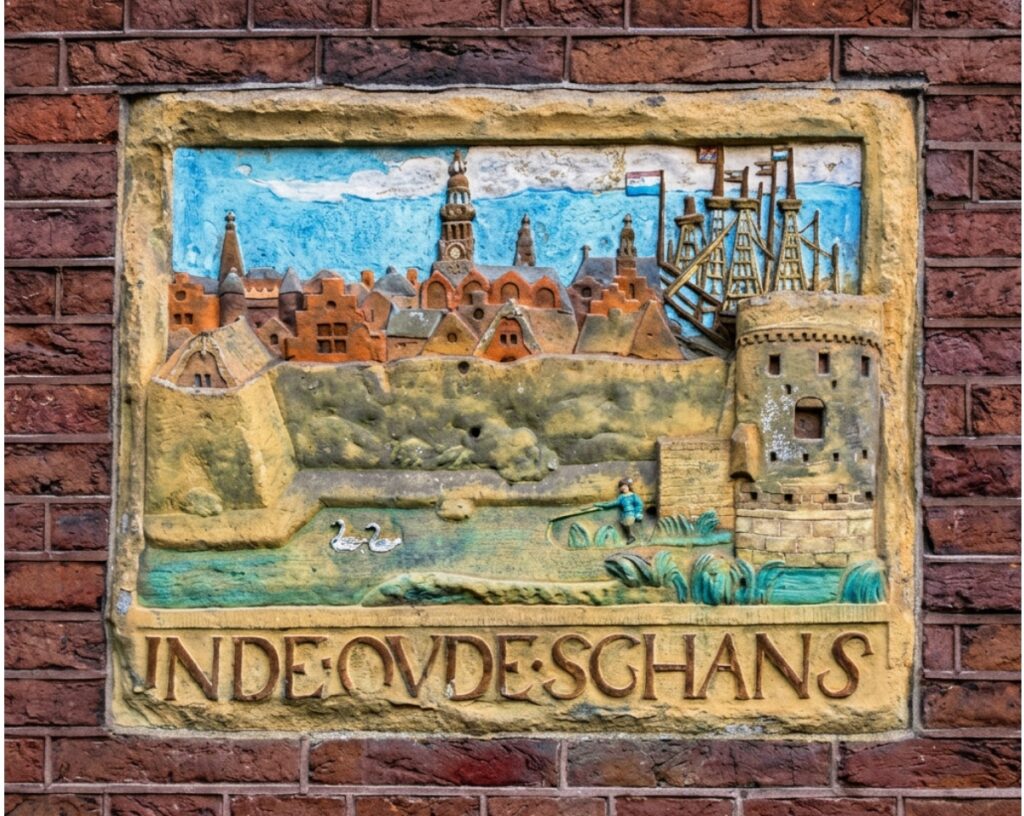
While the gables up top were adorned with vases, masks, sea serpents, and such, the lower stretches were also pimped up – it’s a good moment to note that the Dutch word for gable, gevel, actually means the whole face of the building, not just the happy hat on top. That full face often came striped: red brick laced with white sandstone, which the Dutch deliciously call speklagen, or bacon layers. Set into the wall, you’d also often find a gevelsteen, a carved wall plaque advertising the trade of whoever lived there – a tooth, say, for the household that owned pliers and restraining straps. All this glam was useful in other ways: before the city numbered its houses in the 1700s, your gevel or the stone set into it was your address.
But let’s stay real: all this goddam prettiness evolved from scamming the taxman.
Not so golden
When the money really poured in (spice trade, slave trade, plunder) in the 1600s, Amsterdam ran out of room and planned its own expansion. Three grand canals – Herengracht, Keizersgracht, Prinsengracht – were dug in a ring around the old town, with its own medieval heart now being the Red-Light District.
This Canal Ring may now be a UNESCO World Heritage site, but it basically began as a speculative property scheme sold off plot by plot to the newly rich. The prime real estate, the Golden Bend, is where the banks and deepest pockets lived: they could afford to be taxed on two or more plots of land.
Beyond it, more modest neighbourhoods like the Jordaan went up to house workers and the stinkier industries.
The blubbery soil still meant that more monumental buildings risked sinking back into the muck. Besides, this was a pragmatic merchant state. There was no royalty to project their monstrous egos through palaces and such nonsense.
One world wonder, many miracles
There was one enormous exception to this lack of nonsense. On Dam Square, the city spoiled itself by building a monument to itself: a Town Hall so vast it was hailed as the eighth wonder of the world – and to keep it from sinking into the swamp, it drove 13,659 wooden piles into the muck beneath it. (Dutch schoolchildren remember the number by cheating: the days in a year, 365, with a 1 in front and a 9 on the end.) The merchants eventually handed it to a king, and it’s the Royal Palace today: an ego-monument standing on a forest hammered upside-down into a bog.
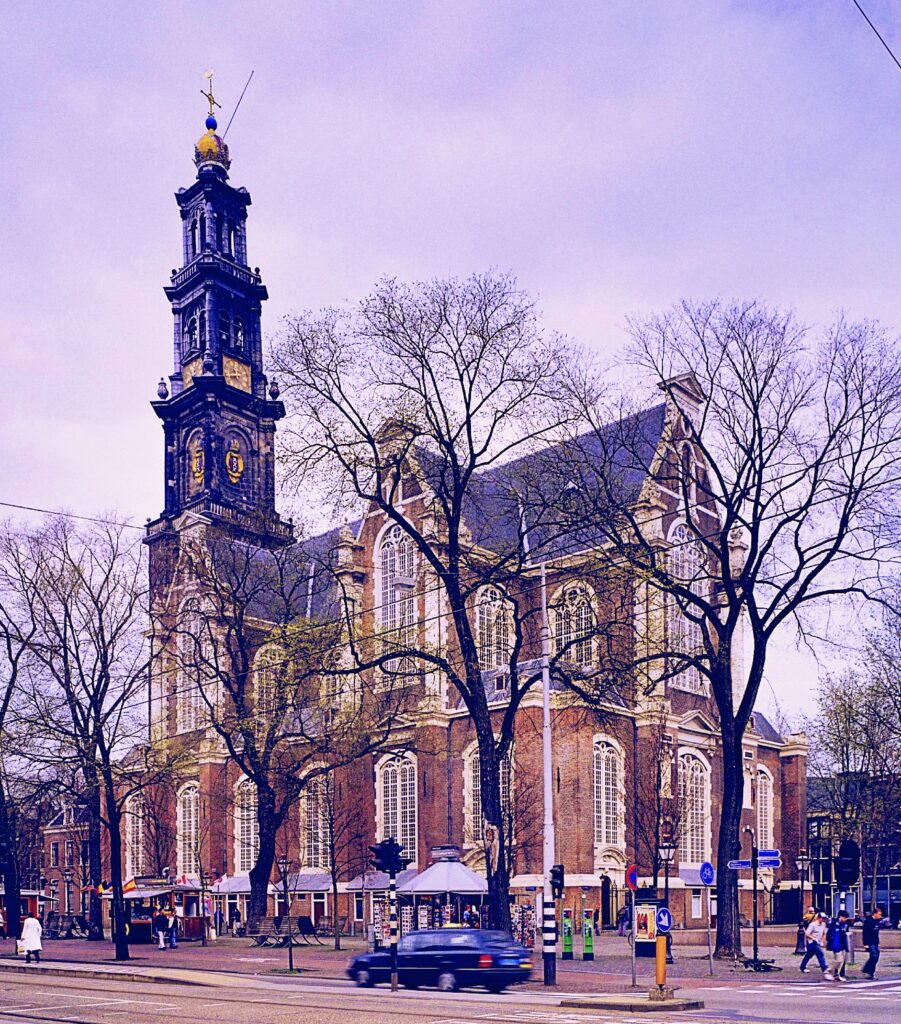
The churches have their own stories, with their massive organs and improbable miracles. Under Protestant rule, the Catholics weren’t allowed to worship in public – so they built hidden churches. Our Lord in the Attic, for instance, is a full chapel, folded invisibly into a canal house, hidden in plain sight. Meanwhile, the Protestant towers went up loud and proud. Today, these towering fuck-yous still define the city’s skyline.
Not everyone had to hide. Amsterdam’s Sephardic Jews – refugees from the Inquisition and, by the boom years, one of the richest Jewish communities in Europe – built the largest synagogue on earth, right out in the open. The Esnoga (1675) is a vast brick hall modelled on Solomon’s Temple. It remains lit by candles to this day, and highlights the city’s famous tolerance: real, lucrative and entirely selective.
Take that, you Protestant bastards
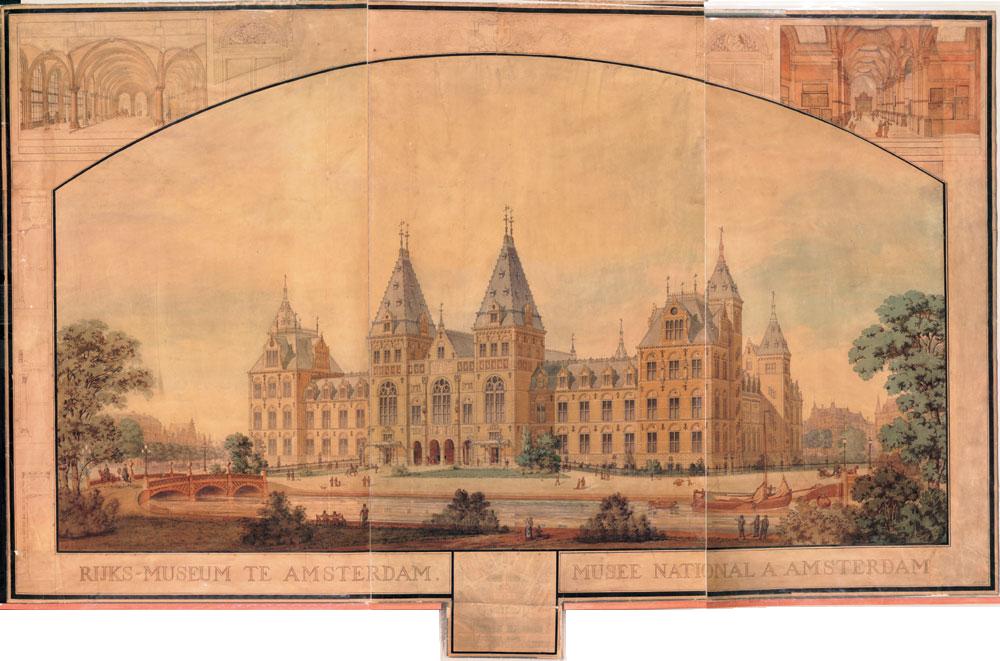
Amsterdam’s second flowering came two centuries later, when a Catholic architect exacted his revenge on the skyline. Pierre Cuypers built the twinned Rijksmuseum and Centraal Station.
The Protestants were outraged. These buildings were too Gothic, too Catholic, too much. Wits nicknamed the museum “the Bishop’s Castle” and the station “the French Convent.” Both buildings were scandals fueled by bigotry. Now they’re postcards.
Centraal Station also walled the city off from the very water that had made it rich. That separation left Amsterdam Noord, across that water and the latest home for the city’s stinkier industries, largely ignored for over a century.
Architecture in an apron
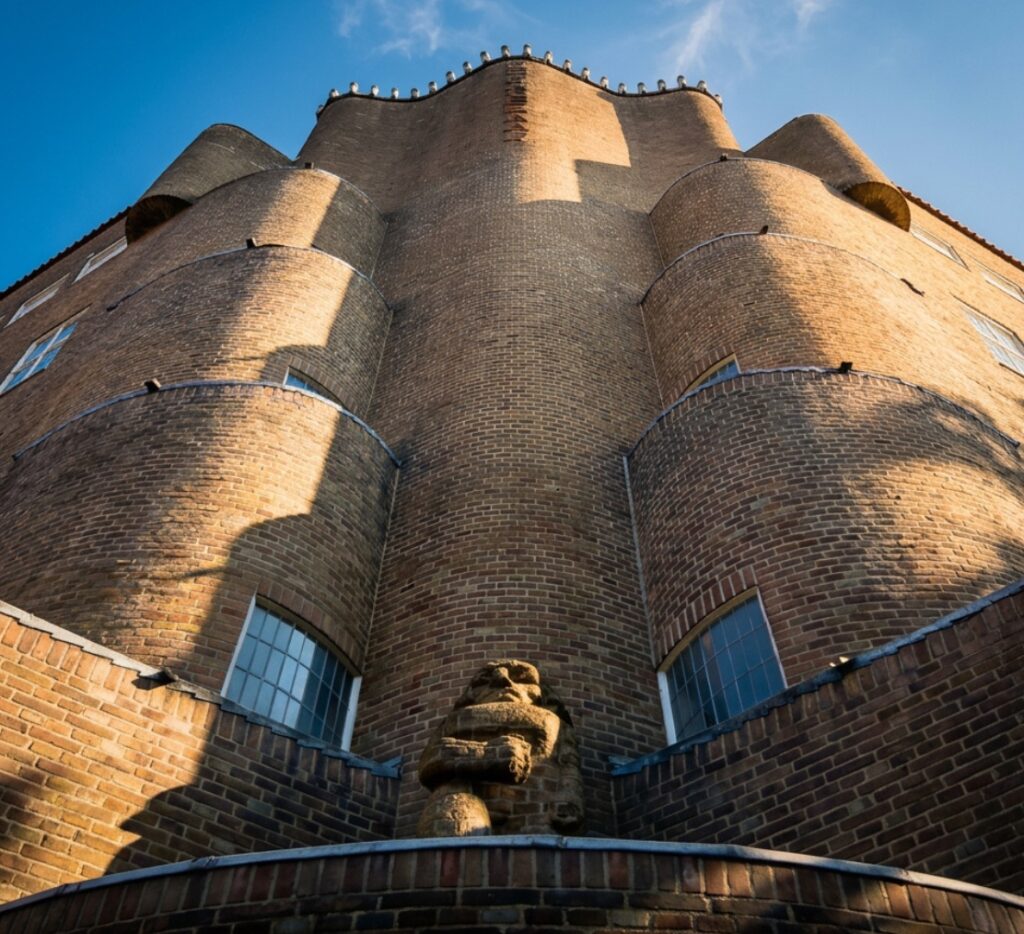
As the supporting poles grew longer and stronger, Amsterdam could indulge more. Berlage’s stock exchange helped inspire the Amsterdam School – aka ‘Apron Architecture’, because the brickwork billowed like fabric. Reinforced concrete – the emerging tech that rewired modern building everywhere – now provided the structure, freeing the brickwork for swoopy, expressive exteriors. Elsewhere, that freedom bought glass towers; here it bought social housing as a fever dream. Respect.
Then the Depression hit, and the need to cut corners turned the swoops into right angles. The school had to bow to pure functionalism – ‘New Building‘ – which was already stripping everything down to clean lines, glass and zero extras, especially after WWII, when there was a lot of building to do.
Building, then dynamiting utopia
The most ambitious version of pure functionalism wasn’t a building but a vision. In 1935, Cornelis van Eesteren’s General Expansion Plan mapped out entire new districts to the west – the “Garden Cities” – and dictated where the city would grow for decades: light, air, and green, all by the numbers. It became a textbook of modern city planning before the neighbourhoods became textbook examples of urban decline.
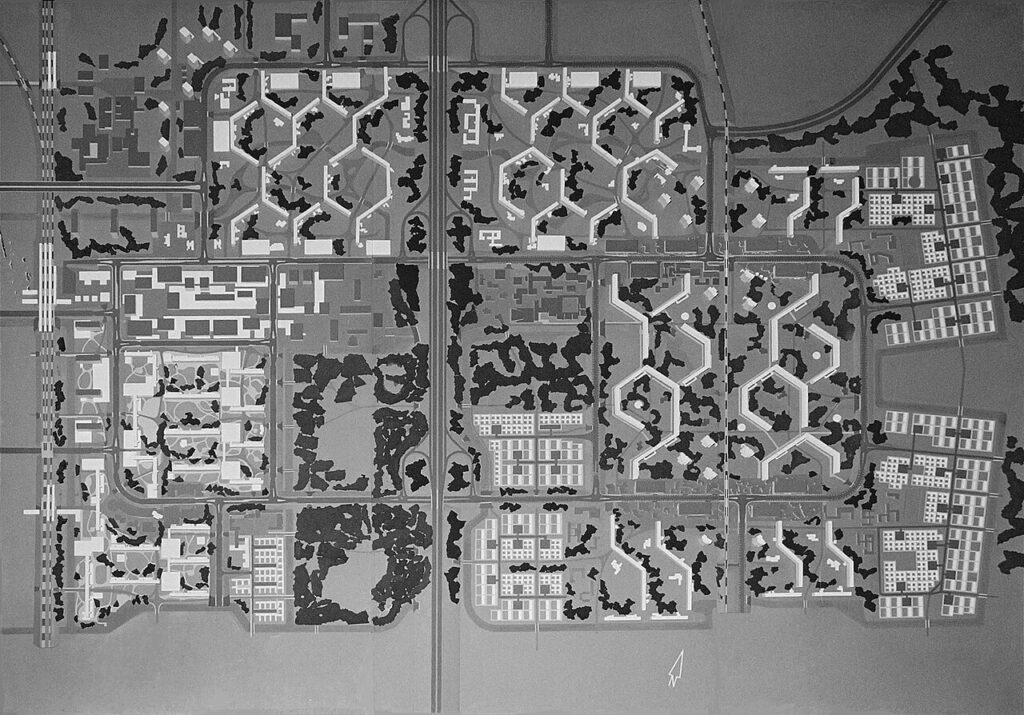
In the 1960s, the city pushed the plan’s logic to its limit with the Bijlmer – a honeycomb of identical high-rises set in green, meant to be the future, the same future that went up and then back down, from the dynamited towers of St. Louis to the Paris banlieues. Lesson learned: buildings can carry a dream and still fail miserably.
And then it fell quiet
The darkest demolition, though, wasn’t a failed dream or one of the city’s charming mistakes. It was a choice – made twice. First, the Jodenbuurt, the old Jewish quarter, was emptied by deportation: roughly three-quarters of the city’s 80,000 Jews were murdered, and never came home. Then, in the 1970s, the planners came for the buildings, bulldozing what was left to push a metro line through.
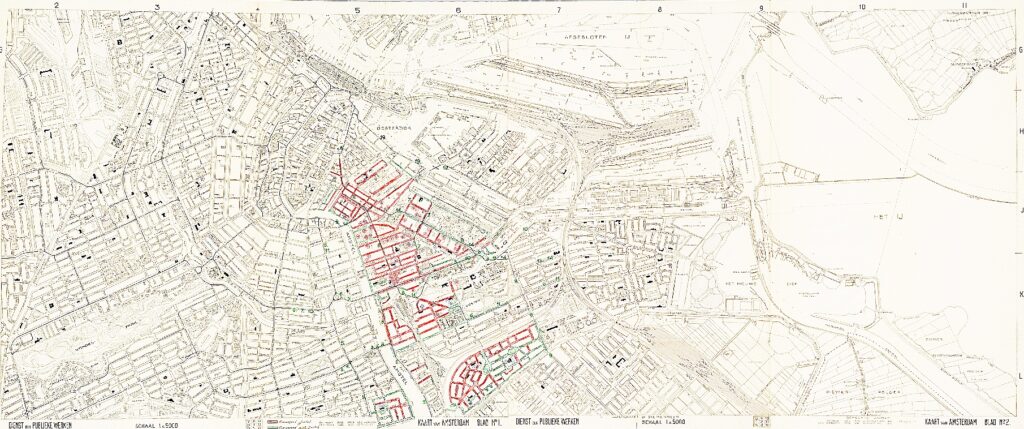
The 1975 Nieuwmarkt riots – water cannon, tear gas, barricades – came too late to save the quarter, but they killed the broader plan: the motorway, the office towers and the metro lines meant to follow. The station beneath it is now hung with art remembering the houses that no longer stand above ground. The Esnoga survived the war; the neighbourhood didn’t survive the peace.
Cities are good at paving over their biggest mistakes – and drowning out the past with their own noise. For instance…
Overengineering, one of many Dutch diseases
By century’s end, showing off was definitely back. The Dutch pavilion at Hanover World Expo 2000 stacked ingredients such as dunes, forests and tulip fields like a “Dutch Big Mac” – the Netherlands as a theme park of itself.
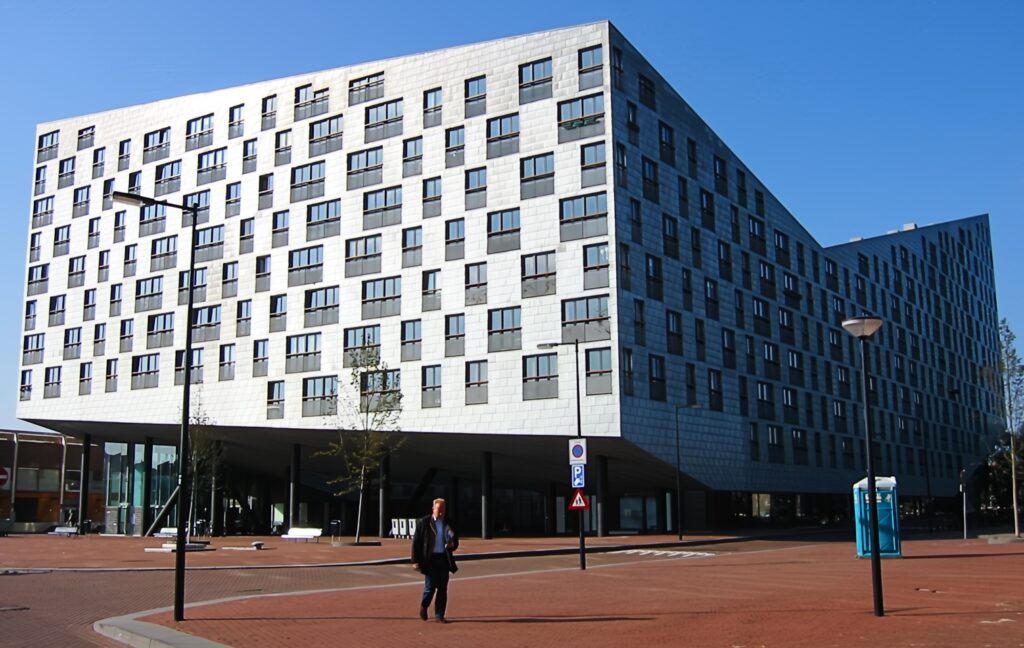
It was a sign of the SuperDutch times, with Amsterdam and its Eastern Docklands very much included as everyone sought to blur the boundaries between buildings and landscape, work and play, land and water. Everything was planned down to the centimeter, including nature.
Sometimes it worked; sometimes it resulted in a sleek designer-prison vibe.
Reduce, reuse, rezone
It had always been cheaper to demolish and start from scratch – the Bijlmer lost half its high-rise grid barely a generation after it went up. But the city learned to think long-term, and turned to second acts. A building that began as the departure point for East European emigrants sailing to South America, then served as a wartime prison, reopened in 2004 as the Lloyd Hotel, complete with sleeping pods by Atelier van Lieshout – and in 2023 reinvented itself yet again as The Hoxton. Libraries became hotels. Drawbridge houses became hotels. A lot of buildings became hotels. So many pretty buildings, so many tourists.
And round it goes…
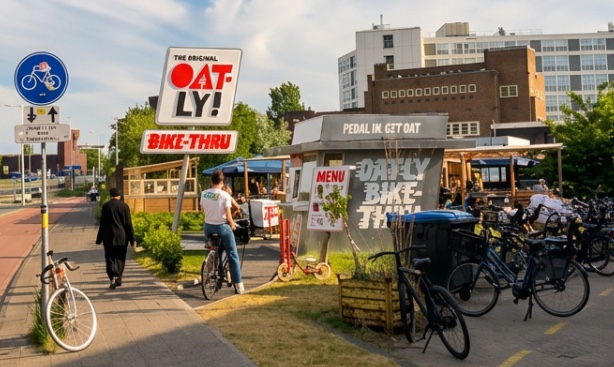
There are other stories… How a trading-house-turned-bank designed by a math-loving spiritualist was repurposed as the new City Archives. A shipyard is now a post-apocalyptic wonderland where squat culture and commerce commingle. And the surrounding Amsterdam Noord, once the part you avoided, is now an architectural hotspot, with the original working-class population being pushed out due to rising prices.
I can certainly go on. And on. About what made people build the way they did: the mud, the money, the lack of money, the fires, the fever dreams, the need to fix past mistakes, the need to make new mistakes. But this is how buildings stop being buildings and start being stories. Look up, look around, go wow, and raise a beer. I do it all the time: I may be jaded, but I still love this town. Never take a building, or a good story, for granted.
Read: ‘Writing about architecture is like dancing about architecture‘
Versions of some one-liners may have appeared earlier in Time Out, Wallpaper, Atlas Obscura and The Globe & Mail.